


Dentabiome Review 2026: Honest Results or Just Another Oral Health Hype?
A breakdown of the science behind oral postbiotics, what's actually inside Dentabiome's formula, how it compares to traditional approaches, and who realistically stands to benefit — before you spend a dollar on it.
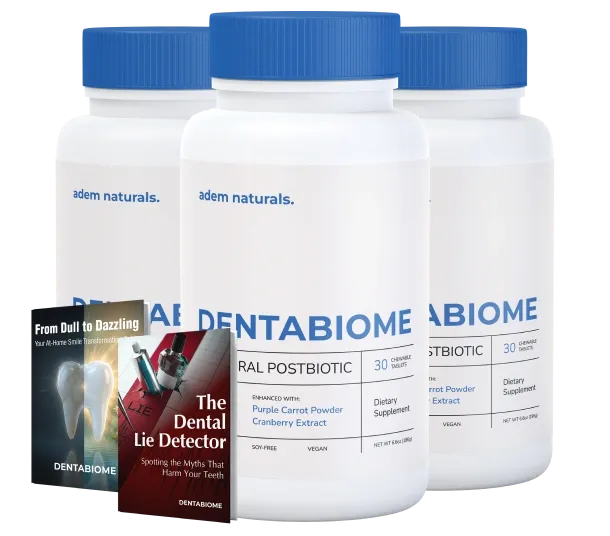
Berry Frost Oral Postbiotic Chewable
A daily chewable built around postbiotic bacterial strains and plant compounds, positioned as an alternative to live-bacteria oral probiotics. Backed by a 60-day refund window.
Dentabiome's central claim — that postbiotics survive the mouth's environment better than live probiotics — has real grounding in microbiology: saliva's lysozyme enzyme does break down a large share of live bacteria before they can act. The ingredient-level research behind individual strains and compounds is reasonable. What's harder to verify independently is the brand's specific "FabM acid-lock" framing, which is sourced mainly from the company's own marketing material rather than independent consensus literature. This review separates what's well-supported from what's still brand-sourced.
Roughly 42% of US adults aged 30 and older have some form of periodontal disease, according to CDC/NHANES surveillance data — and rates are meaningfully higher among certain demographic groups. This isn't a niche problem affecting people with poor hygiene; it's a majority-adjacent condition tied to how oral bacterial communities behave over time, which is exactly the terrain this Dentabiome review is built to examine.
Why Brushing and Flossing Stop Being Enough for So Many People
Searches for oral postbiotic supplements tend to come from a specific place: someone who already does the basics — brushes twice daily, flosses, sees a dentist — and is still dealing with bleeding gums, breath that returns within an hour of mouthwash, or a cavity that showed up despite "doing everything right." That gap between effort and outcome is the actual reason this category of product exists.
The oral hygiene industry has, for decades, framed the mouth as something you clean — a surface-level problem solved by mechanical removal of plaque and stronger antimicrobial chemistry. That framing isn't wrong, but it's incomplete. Modern microbiome research treats the mouth less like a surface to be scrubbed and more like an ecosystem to be balanced. Hundreds of bacterial species live there permanently; the goal isn't eliminating them, it's preventing a small subset of harmful species from dominating the community.
Industry Misconceptions That Keep People Stuck
A few assumptions drive a lot of wasted effort and money in this category. The first is that more aggressive products — stronger mouthwash, harsher whitening agents — automatically mean better outcomes. In practice, alcohol-based mouthwashes can disrupt the oral microbiome indiscriminately, killing beneficial bacteria alongside harmful ones and sometimes worsening the very imbalance a person is trying to fix.
The second misconception is that oral probiotics are a settled, reliable category. They're a logical idea — introduce beneficial bacteria to crowd out harmful ones — but they run into a practical problem: the mouth is not a hospitable environment for live bacterial supplementation. Saliva contains lysozyme, an enzyme specifically built to break down bacterial cell walls. It doesn't distinguish between bacteria that are colonizing your gums and bacteria you just swallowed in capsule form.
Why many solutions fail before they get a fair chance
This is the structural reason a lot of oral probiotic products underperform their own marketing: by the time a meaningful number of live organisms would need to establish a foothold on the tooth surface or gum line, a large percentage have already been neutralized in the saliva itself. The idea isn't flawed — the delivery problem is what undermines it. That distinction matters enormously for evaluating any newer product, including Dentabiome, that claims to solve it differently.
What Dentabiome Actually Is
Dentabiome is a daily chewable tablet positioned in the oral microbiome support category — distinct from both traditional toothpaste/mouthwash products and from the live-bacteria oral probiotics that have become common over the past several years. It markets itself specifically as a postbiotic formula, which is a meaningfully different category, not just a branding variation.
The International Scientific Association for Probiotics and Prebiotics (ISAPP) defines postbiotics as preparations of inanimate microorganisms and/or their components that confer a health benefit on the host. In plain terms: instead of swallowing live bacteria and hoping they survive and produce beneficial compounds once they get where they need to be, a postbiotic delivers those beneficial compounds — already produced, stable, and ready to act — directly.
The product takes the form of a Berry Frost-flavored chewable, taken once daily. The rationale behind the chewable format is mechanical rather than purely sensory: chewing stimulates saliva production and physically distributes the tablet's compounds across tooth surfaces, the gum line, and the tongue — the actual surfaces where oral bacterial activity occurs — rather than sending the formula straight to the stomach as a swallowed capsule would.
Where It Sits in the Market
Dentabiome positions itself against two categories simultaneously: conventional oral hygiene products (toothpaste, mouthwash, whitening strips) that act mechanically or chemically on the mouth's surface, and live-bacteria oral probiotics that attempt biological rebalancing but face the survival problem described above. Its differentiation claim rests entirely on the postbiotic mechanism — stability and survivability — rather than on a novel ingredient nobody has heard of.
Manufacturing and quality signals worth noting
The product is manufactured in an FDA-registered, GMP-certified US facility, and the brand discloses that it is vegan, dairy-free, non-GMO, and non-habit forming. These are standard but meaningful baseline quality markers — they don't validate efficacy, but their absence in a competitor would be a legitimate red flag, so their presence here is worth noting as part of a complete picture.
How the Postbiotic Mechanism Is Supposed to Work
To understand whether Dentabiome's approach makes biological sense, it helps to walk through what's actually happening on a tooth surface when bacterial activity goes wrong — and where a postbiotic formula is designed to intervene.
The Biofilm Problem, in Plain Terms
Dental plaque is a biofilm — a structured community of bacteria embedded in a self-produced protective matrix. Think of it less like a puddle of bacteria and more like a city with infrastructure: certain species build the protective "walls" (extracellular polysaccharides), others produce the acids that erode enamel, and the structure as a whole is far more resistant to disruption than any single bacterium would be alone. This is precisely why brushing alone, however thorough, struggles to fully dislodge mature plaque — you're not fighting loose particles, you're fighting an organized structure.
Dentabiome's marketing centers heavily on a specific enzyme called FabM, which the brand describes as enabling a protective "acid-lock" that shields harmful bacteria like Streptococcus mutans from elimination. It's worth being precise here: FabM is a real bacterial gene involved in unsaturated fatty acid synthesis and stress tolerance in certain Lactobacillales species — the brand's own cited reference points to legitimate microbiology literature on this. What's brand-specific is the "acid-lock" framing and terminology, which is a marketing simplification of a real underlying mechanism rather than an established clinical term you'd find in a periodontology textbook.
Disruption of the protective biofilm matrix
Enzymatic compounds in the formula are intended to help break down the structural matrix that shields acid-producing bacteria, making them more exposed to elimination through normal saliva flow and oral hygiene.
Competitive postbiotic activity
Once the protective barrier is compromised, postbiotic compounds from L. plantarum, L. salivarius, and L. rhamnosus are positioned to act directly against harmful species and their byproducts, without needing to first establish a living colony.
Bacterial energy depletion via xylitol
Xylitol is metabolically "tricked" into being processed by acid-producing bacteria the same way sugar would be, except it can't be fully fermented — bacteria expend energy attempting to use it without gaining the fuel they need, which is a well-documented mechanism independent of this specific product.
Polyphenol-driven anti-inflammatory support
Anthocyanins from purple carrot and proanthocyanidins from cranberry are intended to reduce gum inflammation and interfere with bacterial cell-signaling ("quorum sensing"), which bacteria use to coordinate biofilm formation.
Each of these four steps has independent scientific plausibility. What's not independently verifiable from outside the company is exactly how much of an effect the specific combination and dosing in Dentabiome produces — that data, where it exists, comes primarily from the brand's own formulation rationale rather than a published clinical trial on the finished product itself. This is a common limitation across the supplement industry broadly, not specific to this brand, and it's a distinction worth understanding before reading the ingredient-by-ingredient section.
Ingredient-by-Ingredient Breakdown
Seven components make up the formula. Below, each is examined on its own terms: what it is, the role it plays specifically in this product, the scientific rationale behind its inclusion, and where the evidence is strongest or weakest.
Dual-Strain L. plantarum Complex
Primary acid-neutralizing postbioticDefinition: Lactobacillus plantarum is a well-studied bacterial species used across both gut and oral health applications, here included as two complementary postbiotic strains rather than live organisms.
Role & function: Positioned as the formula's primary mechanism against S. mutans, the bacterium most directly implicated in cavity formation, along with general acid neutralization in the plaque environment.
Scientific rationale: L. plantarum-derived postbiotic compounds have been studied for antimicrobial activity against cariogenic bacteria and for supporting a less acidic oral pH, both of which are mechanistically tied to reduced enamel demineralization.
Context: The specific "99.9% S. mutans eradication" figure cited in brand materials reflects an in-vitro lab condition rather than a guaranteed in-mouth outcome — a distinction worth holding onto for every percentage figure in this category, not just this one.
Lactobacillus salivarius
Volatile sulfur compound reductionDefinition: A Lactobacillus species naturally present in human saliva, studied specifically in the context of halitosis (chronic bad breath).
Role & function: Bad breath is most often caused by anaerobic bacteria producing volatile sulfur compounds (VSCs) — primarily on the back of the tongue and in periodontal pockets. L. salivarius-derived postbiotics are included specifically to interfere with the metabolic pathways these bacteria use to produce VSCs.
Scientific rationale: Independent research on L. salivarius strains has shown measurable reductions in VSC markers and self-reported breath odor in supplemented populations, making this one of the better-supported individual claims in the formula.
Lactobacillus rhamnosus
Gum tissue protective strainDefinition: One of the most extensively researched probiotic/postbiotic strains across both gut and oral applications, with a comparatively large independent literature base.
Role & function: Positioned in the formula for periodontal support — specifically interfering with Porphyromonas gingivalis, a key pathogen in gum disease progression and bone loss around teeth.
Scientific rationale: Published research on L. rhamnosus metabolites has demonstrated inhibitory effects on periodontal pathogens in laboratory settings, lending reasonable plausibility to its inclusion for gum-focused outcomes specifically, separate from the cavity- and breath-focused strains above.
BioFresh Clean Complex
Proprietary enzymatic blendDefinition: A branded enzyme complex unique to this formula, described as targeting the structural integrity of dental biofilm rather than the bacteria living within it.
Role & function: Functions as the "door opener" in the formula's overall strategy — degrading the protective matrix so that the postbiotic strains above have a less defended target.
Context: Because this is a proprietary blend, its exact composition and dosing aren't independently verifiable outside the company's own disclosures, which is the single largest transparency gap in the ingredient list. Enzymatic biofilm disruption as a general strategy is supported in dental research; the specific blend's real-world performance is brand-reported.
Xylitol
Bacterial energy disruptionDefinition: A naturally occurring sugar alcohol found in fruits and vegetables, with one of the longest and most independently validated track records of any ingredient in oral health supplementation.
Role & function: Acid-producing bacteria attempt to metabolize xylitol the way they would sugar, but cannot complete fermentation, resulting in a futile energy cycle that reduces overall bacterial acid output over time.
Scientific rationale: This is the single most independently substantiated mechanism in the entire formula, supported by decades of dental research entirely separate from this brand, including reductions in S. mutans counts and cavity incidence in xylitol-using populations.
Purple Carrot Powder
Anthocyanin-based anti-inflammatoryDefinition: A whole-food-derived source of anthocyanins, the same class of antioxidant pigments found in blueberries and other deep-purple produce.
Role & function: Included for gum inflammation support and for interfering with bacterial "quorum sensing" — the chemical signaling bacteria use to coordinate biofilm growth as a community rather than as individual cells.
Scientific rationale: Anthocyanins have a reasonably strong general anti-inflammatory evidence base across multiple tissue types; their specific quorum-sensing disruption in the oral cavity is a more emerging area of research than their anti-inflammatory role broadly.
Cranberry Extract
Bacterial adhesion inhibitorDefinition: A polyphenol-rich extract best known for urinary tract applications, but with a separate and distinct research base in oral health tied to its proanthocyanidin content.
Role & function: Proanthocyanidins are studied for interfering with the ability of bacteria like S. mutans to physically adhere to tooth surfaces — without adhesion, biofilm formation is significantly slowed at the source.
Scientific rationale: This anti-adhesion mechanism is one of the more mechanistically clean, independently studied claims in the formula, distinct from cranberry's better-known urinary health applications.
What the Benefits Actually Mean in Practice
Marketing copy for products in this category tends to state benefits as flat claims — "fresher breath," "healthier gums" — without explaining the mechanism, the realistic timeline, or who's actually likely to notice a difference. Here, each benefit is broken down along those three lines.
Reduced Gum Bleeding
Longer-Lasting Fresh Breath
Fewer New Cavities
Plaque and Biofilm Reduction
A realistic framing across all four benefits: this is a supportive supplement layered on top of hygiene, not a replacement for it, and the timeline for noticing change is measured in weeks of consistent use, not days.
Strengths, Limitations, and Honest Concerns
Evaluating a formula like this requires holding two things at once: the underlying science is more credible than a typical "miracle ingredient" supplement, and the marketing language still outpaces what's independently verifiable. Both are true simultaneously.
Genuine Strengths
- The postbiotic-over-probiotic argument is mechanistically sound — lysozyme-driven bacterial die-off in saliva is real and well-documented
- Xylitol's mechanism is independently validated by decades of dental research outside this brand
- Strain selection (L. plantarum, L. salivarius, L. rhamnosus) targets three genuinely distinct problems — cavities, breath, and gums — rather than one mechanism marketed three ways
- Chewable delivery format has a logical mechanical rationale tied to saliva distribution, not just convenience
- GMP-certified, FDA-registered manufacturing and a 60-day refund window are above the baseline for the category
Real Limitations
- The "FabM acid-lock" narrative, while based on a real gene, is a brand-specific simplification not found in independent periodontology consensus literature
- The BioFresh Clean Complex is proprietary, meaning its exact composition and dosing can't be independently verified
- No published clinical trial on the finished product itself appears in independent databases — the evidence is ingredient-level, not formula-level
- Specific percentage claims (99.9% eradication, 47% bacteria reduction) reflect lab or brand-sourced conditions, not guaranteed in-mouth outcomes for every user
- Sold exclusively through the brand's own checkout system, which limits independent price and authenticity verification compared to retail availability
Best Use Cases
This formula is best understood as a complementary layer for people already maintaining baseline hygiene who are dealing with a specific, persistent issue — chronic bad breath, recurring mild gingivitis, or a pattern of cavities that diet and brushing changes haven't fully resolved. It is not designed, and shouldn't be expected, to function as a replacement for professional periodontal treatment in advanced cases.
Where caution is warranted
Anyone with diagnosed periodontitis involving bone loss, anyone immunocompromised, or anyone currently under active dental treatment should treat this as a conversation to have with their dentist first, not a substitute for that relationship. The product's own positioning — as a complement to, not a replacement for, professional care — is the correct framing, and it's worth taking that disclaimer seriously rather than as boilerplate legal language.
What Consumer Experience Patterns Actually Show
Individual testimonials are easy to cherry-pick in either direction — a handful of glowing reviews prove nothing on their own, and neither does a handful of complaints. What's more useful is looking for a pattern across a larger body of feedback, which tends to reveal the realistic shape of an outcome rather than its most dramatic edge case.
The Timeline Pattern
Across user feedback gathered from multiple independent review sources, a consistent sequence emerges rather than a uniform "it worked" or "it didn't." Early reports — typically within the first one to two weeks — tend to focus on breath freshness and a subjective sense of a "cleaner" mouth feeling, which aligns with the more immediate mechanisms (xylitol, cranberry's anti-adhesion effect). Reports of reduced gum bleeding and visibly less plaque buildup tend to appear later, generally in the three-to-eight-week range, which is consistent with inflammation and biofilm-structure changes taking longer than surface-level freshness to manifest.
The Skepticism-to-Surprise Pattern
A recurring theme in independent feedback is that people who tried this after already being skeptical of probiotic-style oral products — specifically because previous oral probiotics "never seemed to do anything" — were among the more positively surprised group. This lines up with the mechanistic argument: if someone's prior negative experience was genuinely caused by the probiotic survival problem, a postbiotic delivery method addressing that specific failure point would predictably produce a different outcome for that same person.
Where Feedback Is More Mixed
Reports are notably less consistent around cavity prevention specifically — which makes sense, since cavity formation is influenced by diet, genetics, and existing enamel condition in ways that take months, not weeks, to show up in a dental checkup. People expecting a checkup-to-checkup comparison after only a few weeks of use are the most likely to report disappointment, not because the mechanism failed, but because the timeline for that particular outcome was always going to be longer than for breath or gum bleeding.
The Broader Oral Microbiome Science Worth Understanding
Whether or not Dentabiome specifically is the right fit for any individual, the underlying science of oral microbiome health is worth understanding on its own — it reframes a lot of long-held assumptions about cavities, gum disease, and bad breath.
The Oral-Systemic Connection
One of the more significant shifts in dental research over the past two decades has been recognizing that oral microbiome dysbiosis isn't contained to the mouth. Periodontal pathogens and the chronic low-grade inflammation they trigger have been linked in research to cardiovascular disease, type 2 diabetes (the relationship appears to run in both directions), and even neurodegenerative conditions including Alzheimer's disease, where specific periodontal bacteria have been detected in brain tissue in some studies. This doesn't mean gum disease causes these conditions outright, but it elevates oral health from a cosmetic or comfort issue to a genuinely systemic one.
Lifestyle and Nutritional Factors That Compound the Problem
Diet remains the single largest modifiable factor in oral microbiome composition. Frequent exposure to fermentable carbohydrates — not just total sugar intake, but the frequency of exposure throughout the day — gives acid-producing bacteria repeated opportunities to lower oral pH. Someone who sips a sugary drink over two hours is creating a more sustained acidic environment than someone who eats the same amount of sugar in one sitting. Reduced saliva production (from medication side effects, aging, dehydration, or certain medical conditions) removes one of the mouth's primary natural defenses, since saliva continuously buffers acid and clears food debris.
Research Directions Still Developing
The postbiotic field broadly is younger than probiotic research, though it's growing quickly — a 2024 systematic review on postbiotics and dental caries (cited in Dentabiome's own reference list) reflects this emerging-but-real evidence base. What's still developing is large-scale, long-term, independently funded clinical data on finished consumer products specifically, as opposed to laboratory studies on isolated postbiotic compounds. This is the same maturation curve probiotics themselves went through years earlier, and it's a reasonable, honest caveat for the entire category rather than a flaw unique to any one brand.
Dentabiome Compared to Traditional and Alternative Approaches
No single approach to oral health is universally superior — each comes with a different mechanism, timeline, and tradeoff profile. The comparison below is meant to clarify where Dentabiome fits among the realistic options, not to declare a single winner.
Postbiotic vs. Traditional Live-Bacteria Probiotics
| Factor | Live Probiotics | Postbiotic (Dentabiome's category) |
|---|---|---|
| Survival in saliva | Largely neutralized by lysozyme | Not applicable — no live organisms to neutralize |
| Shelf stability | Degrades with heat, light, time | Stable; compounds don't need to stay "alive" |
| Batch consistency | Variable colony counts | More precise, consistent dosing |
| Immune response risk | Possible mild inflammatory response to live organisms | Generally recognized as non-reactive signaling molecules |
| Research maturity | Longer overall research history | Newer, smaller independent evidence base |
Dentabiome vs. Prescription Antimicrobial Rinses
Prescription options like chlorhexidine rinses are considerably more aggressive and faster-acting against bacterial load, which makes them appropriate for acute post-surgical or severe periodontal situations. The tradeoff is a side-effect profile that includes temporary tooth staining, altered taste perception, and — notably — broad-spectrum disruption of the oral microbiome rather than selective rebalancing. Dentabiome's approach is slower and gentler, intended for long-term daily maintenance rather than short-term acute intervention, and it does not require a prescription or carry the same side-effect considerations.
Dentabiome vs. Lifestyle/Dietary Approaches Alone
Dietary modification — reducing fermentable carbohydrate frequency, increasing water intake to support saliva production — addresses root causes without any product cost, and nothing in this formula is designed to replace that foundation. The realistic value-add of a postbiotic supplement is addressing the bacterial and inflammatory dynamics that diet changes alone often don't fully resolve, particularly for people whose oral microbiome has already shifted toward a less favorable composition over years.
Who Dentabiome Is Actually Built For
People with chronic bad breath that returns quickly after brushing. If mints and mouthwash only buy you an hour, the underlying VSC-producing bacterial activity — not a hygiene gap — is the more likely driver, and that's the specific mechanism this formula targets most directly.
People with mild-to-moderate gum bleeding during brushing or flossing. Early-stage gingivitis responds well to interventions that reduce bacterial load and inflammation simultaneously, which is the formula's core strategy.
People who've tried live oral probiotics without noticing a difference. If the survival-in-saliva problem was the actual reason a previous probiotic underperformed, a postbiotic delivery method is a logically different mechanism worth testing.
People prone to recurring cavities despite consistent hygiene. The xylitol and L. plantarum combination targets the acid-production pathway specifically, which is relevant when hygiene alone isn't the missing variable.
People who want a maintenance layer alongside — not instead of — professional dental care. This is the use case the product is most defensibly suited for: a daily supplement that complements an existing care routine rather than replacing it.
Who Should Think Twice Before Buying
Anyone with diagnosed periodontitis involving bone loss. This level of progression typically requires professional intervention — scaling, root planing, or surgical treatment — that a supplement isn't positioned to substitute for.
Anyone expecting results within days. Based on the mechanism and the feedback patterns reviewed, meaningful change for most outcomes takes several weeks of consistent use — same-week expectations are a setup for disappointment regardless of whether the formula is working as intended.
Anyone whose primary issue is structural, not bacterial. Misaligned bite, cracked teeth, or existing restorative work problems aren't within scope for any oral microbiome supplement, regardless of formula quality.
Anyone unwilling to maintain baseline hygiene alongside it. Every mechanism described in this review assumes brushing and flossing continue — this product supports that foundation, it doesn't substitute for it.
Anyone who needs independently published clinical trial data on the finished product before trying anything. That specific bar isn't met here — the ingredient-level evidence is reasonable, but formula-level independent trials aren't currently available, which is worth being upfront about rather than glossing over.
Pricing, Packages, and Whether the Guarantee Is Meaningful
Dentabiome is sold exclusively through the official checkout system in three package sizes, with a pricing structure that — like most supplements in this distribution model — rewards larger, longer-term commitments substantially over single-bottle trials.
Current Package Structure
Is the Package Structure Logical, or Just Upselling?
There's a legitimate version of this pricing logic and a cynical version, and it's worth naming both. The cynical read: tiered discounts are a standard conversion tactic across the entire supplement industry, designed to push average order value up regardless of whether a person needs six bottles. The legitimate read: given that the mechanisms described earlier — biofilm restructuring, inflammation reduction, breath-bacteria rebalancing — operate on a multi-week timeline, a 60-day supply genuinely is a thin margin for judging whether a slower-acting mechanism worked, and 90 to 180 days aligns more realistically with the timeline patterns described in the consumer experience section above. Both of these things can be true simultaneously: the structure benefits the company's average order value and happens to align with a defensible usage timeline.
What the Guarantee Actually Covers
The product is backed by a 60-day money-back guarantee, described by the brand as unconditional. A 60-day window is on the shorter end relative to some competitors in the broader supplement space that offer 180-day windows, but it's still long enough to move past the early "breath and surface feel" improvements and into the territory where gum bleeding and plaque-related changes would plausibly be noticeable, based on the timeline patterns discussed earlier in this review.
20 Questions People Actually Ask Before Buying
What's the actual difference between a probiotic and a postbiotic?
A probiotic is a live microorganism that needs to survive and colonize to produce its beneficial effects. A postbiotic is the beneficial compound that bacteria produce — already made, stable, and active — without requiring any living organism to survive the journey to where it's needed.
Does Dentabiome replace brushing and flossing?
No. Every mechanism in the formula is designed to work alongside mechanical hygiene, not instead of it. Skipping brushing and flossing would undermine the biofilm-disruption benefit the product is built around.
How long before I'd realistically notice anything?
Based on feedback patterns, breath-related changes are the earliest signal, often within one to two weeks. Gum bleeding and plaque-related changes tend to take three to eight weeks of consistent daily use.
Is it safe to use with braces or other dental appliances?
The chewable format and ingredient profile don't present an obvious conflict with braces, but anyone with active orthodontic or dental appliance work should confirm with their provider, since individual situations vary.
Can I take it alongside my regular mouthwash?
Alcohol-based mouthwashes can disrupt the broader oral microbiome, which may work against the rebalancing mechanism this formula relies on. An alcohol-free mouthwash is the more logical pairing if you want to keep using one.
Is the FabM "acid-lock" claim independently verified science?
The FabM gene itself is real and documented in microbiology literature related to bacterial stress tolerance. The specific "acid-lock" framing and its described real-world impact are the brand's own simplification and marketing interpretation of that underlying science, not an independently established clinical consensus term.
Does this work for kids?
The product is formulated and marketed for adult use. Any pediatric oral health supplement decision should go through a pediatric dentist rather than be based on adult-formulated product marketing.
What does "non-habit forming" actually mean here?
It means the formula contains no compounds associated with physical or psychological dependency — relevant context since some oral comfort products historically contained ingredients with habituation potential, which isn't the case in postbiotic or xylitol-based formulas.
Is xylitol safe for daily long-term use?
Xylitol has one of the longest safety track records of any sugar substitute used in oral health specifically, with decades of research outside this brand. The main caution is for pet owners — xylitol is toxic to dogs and should be stored accordingly.
Will this whiten my teeth?
Whitening isn't a primary mechanism of this formula. Any surface-level brightness some users report is more likely linked to reduced plaque/biofilm buildup revealing the natural tooth surface, not an active whitening agent.
What happens if I stop taking it?
Because the mechanism is ongoing bacterial rebalancing rather than a one-time structural fix, the working assumption — consistent with how postbiotic and microbiome-based interventions generally function — is that benefits depend on continued use rather than being permanent after stopping.
Is there independent clinical trial data on the finished Dentabiome product?
Not currently in independent databases. The evidence base is strongest at the individual ingredient level (xylitol, specific Lactobacillus strains, cranberry proanthocyanidins); formula-level independent trials on the finished product aren't publicly available at this time.
How is this different from ProDentim or similar oral probiotic competitors?
The primary structural difference is the postbiotic versus live-probiotic delivery model. ProDentim and similar products deliver live bacterial strains intended to colonize; Dentabiome delivers the bacterial-derived compounds directly, sidestepping the saliva-survival problem live probiotics face.
Can it help with dry mouth?
Indirectly — the chewing action stimulates saliva flow, which may offer some temporary relief for dry mouth symptoms, though it isn't formulated as a dedicated dry-mouth treatment.
Is this appropriate for someone who just had a dental procedure?
Anyone recovering from a recent extraction, surgery, or deep cleaning should follow their dentist's specific post-procedure guidance first; introducing any new oral product during an active healing period should be cleared with the treating provider.
Does it taste medicinal or unpleasant?
The product is formulated and flavored as "Berry Frost," explicitly designed to avoid the unpleasant aftertaste associated with some chewable supplements — this is a stated design goal rather than an independently tested sensory claim.
Why is it only sold through one website instead of retail stores?
Direct-to-consumer distribution is the standard model for this entire product category, largely because it allows the brand to control pricing, bundle offers, and guarantee terms without retail markup — it isn't unique to or necessarily a red flag for this specific brand.
What's the realistic risk of trying it?
Financially, the 60-day guarantee limits downside if used within that window. Health-wise, the ingredient profile doesn't raise obvious red flags for most healthy adults, though anyone with specific medical conditions or on medication should still confirm with a healthcare provider before starting any new supplement.
Does using it mean I can skip dental checkups?
No — nothing in the mechanism or evidence base supports skipping professional checkups. Cavities, gum disease progression, and oral cancer screening all require professional evaluation that a supplement cannot substitute for.
What's the single most evidence-backed claim in this formula, if you had to pick one?
Xylitol's bacterial energy-depletion mechanism and its associated reduction in cariogenic bacterial activity — this is the component with the deepest, most independent, longest-standing research base entirely separate from this brand's own marketing.
A Balanced Conclusion on Dentabiome
The strongest version of the case for Dentabiome doesn't rest on dramatic percentage claims or testimonial language — it rests on a genuinely sound piece of microbiology: live bacterial supplements face a real survival problem in the oral cavity, and a postbiotic delivery model is a logical, evidence-grounded response to that specific problem. Combined with xylitol's long-independently-validated mechanism and a strain selection that targets three distinct, common complaints — breath, gum bleeding, and cavity recurrence — the formula has more internal coherence than a typical supplement built around a single trendy ingredient.
The honest limitations are just as real. The brand's signature "FabM acid-lock" narrative simplifies a genuine but narrow piece of bacterial microbiology into marketing language that goes further than independent periodontology literature currently supports. The proprietary BioFresh Clean Complex can't be independently verified. And there is, at the time of this review, no published independent clinical trial on the finished product itself — only on its individual components, which is a meaningfully different and lower evidentiary bar.
Put plainly: this isn't a product built on pseudoscience, and it also isn't a product with the kind of independently verified clinical proof that would let anyone claim certainty about outcomes. It sits in the same evidentiary middle ground that a large share of credible-but-unproven-at-scale supplements occupy — worth a measured trial for the right person, not worth treating as a guaranteed fix for anyone.
The clearest fit is someone already maintaining a hygiene baseline, dealing specifically with chronic bad breath, mild gum bleeding, or recurring cavities, who understands the realistic multi-week timeline and is using the 60-day guarantee as the actual safety net it's intended to be — not as a guarantee of results, but as a guarantee that a fair trial costs nothing if it doesn't work.
Considering Dentabiome?
Review current package pricing and the 60-day guarantee terms directly on the official site before deciding.
See Pricing & PackagesSources & Further Reading
- Eke, P. I. et al. Prevalence of periodontitis in adults in the United States: NHANES data. CDC/National Health and Nutrition Examination Survey.
- Lozano, C. et al. (2024). Postbiotics and dental caries: A systematic review. PMC. PMC11894266
- International Scientific Association for Probiotics and Prebiotics (ISAPP). Consensus definition of postbiotics.
- Baty, J. J. et al. Unsaturated fatty acids mediate stress tolerance in Lactobacillales. Abstract Archives.
- Various authors (2024). The effect of enzymatic treatment with mutanase, β-glucanase, and DNase on a saliva-derived biofilm model. PubMed. PMID38154453
- Munoz-Gonzalez, I. et al. Oral Microbiome: A Review of Its Impact on Oral and Systemic Health. MDPI Microorganisms.
- NHANES Oral Health Population Studies. The mouth of America: the oral microbiome profile of the US population. PMC. PMC11643230
- Lasserre, J. F. et al. Dysbiosis revisited: Understanding the role of the oral microbiome in the pathogenesis of gingivitis and periodontitis. PMC. PMC8380683
